
Technical Blog
Wire EDM vs CNC Machining
A practical guide for purchasing managers, mechanical engineers and quality engineers evaluating wire EDM vs CNC machining for precision manufacturing projects.
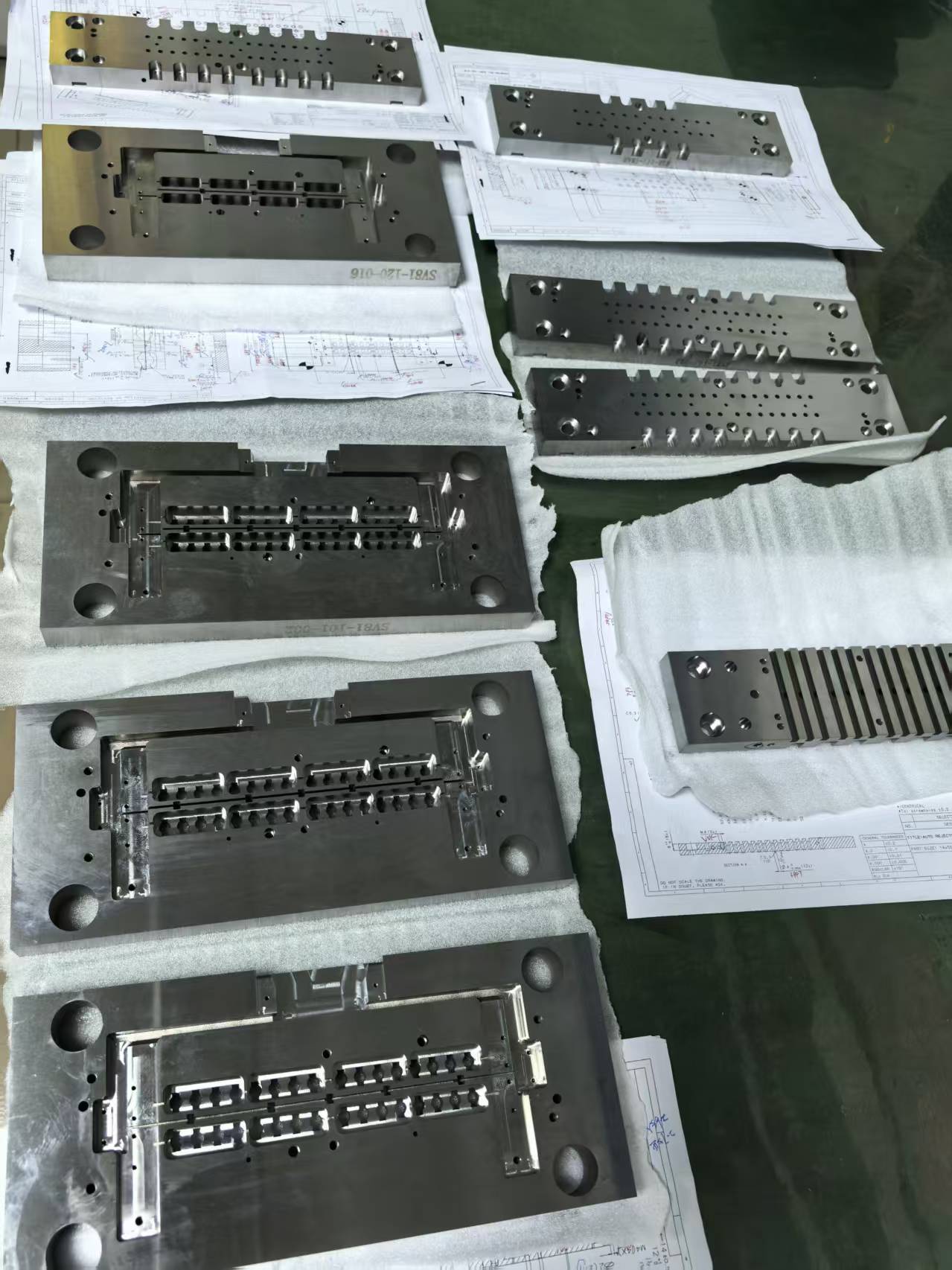
Overview
Wire EDM and CNC machining are both essential processes for precision manufacturing, but they solve different problems. CNC machining removes material with rotating cutting tools, while wire EDM removes conductive material with electrical discharge along a wire path. CNC machining is usually faster for open shapes, pockets, holes and 3D surfaces. Wire EDM is often better for hard materials, fine profiles, small internal radii and features that require accuracy after heat treatment.
Process Principles
The first question for a buyer is material. If the component is aluminum, brass or mild steel with open geometry, CNC machining may be the efficient starting point. If the component is hardened steel, tungsten carbide or a mold insert with narrow internal corners, wire EDM may reduce tool wear and geometry risk. Because wire EDM does not apply mechanical cutting force, it can process delicate profiles that would be difficult to mill without deflection or tool breakage.
Application Fit
The second question is geometry. CNC machining is flexible for three-dimensional shapes, threaded holes, milled pockets and general part features. Wire EDM is limited to cutting along a path through conductive material, but it is excellent for profiles, slots, inserts and plate-like components. If a drawing requires a closed internal contour with a small radius, wire EDM may be the more appropriate process. If it requires sculpted surfaces, CNC machining or grinding may be needed.
Material Considerations
Tolerance requirements also matter. Both processes can be precise, but their strengths differ. Wire EDM is often selected for profile accuracy and small radii in hard materials. CNC machining accuracy depends on machine rigidity, tool condition, fixturing and material behavior. For very tight tolerances, the best process route may combine CNC roughing, heat treatment, wire EDM, grinding and final inspection. Buyers should discuss the entire route instead of asking for a single process by name.
Tolerance Review
Surface finish is another practical difference. CNC machining leaves tool marks based on cutter path, feed and tool geometry. Wire EDM leaves an EDM surface affected by power settings and skim cuts. For some tooling parts, the wire EDM surface is acceptable. For other components, grinding, polishing or EDM parameter optimization may be required. The drawing should state surface roughness or functional surface expectations so the supplier can plan correctly.
RFQ Guidance
Cost comparison depends on quantity, complexity and process time. CNC machining can be economical for simple shapes and larger removal volumes. Wire EDM can be cost-effective for complex profiles that would require small cutters, long machining time or multiple setups. For high-volume work, the process choice may change after prototype validation. A reliable supplier will explain why one process is recommended and where cost can be reduced without sacrificing function.
Quality Control
Lead time also differs. CNC machining can be faster when material and tooling are readily available. Wire EDM may require slower cutting, especially with small wire, thick material or multiple skim cuts. However, wire EDM can avoid delays caused by difficult tool access or post-heat-treatment distortion. International buyers should provide quantity, delivery target and priority level during RFQ so the supplier can propose a realistic schedule.
Cost and Lead Time
For tungsten carbide, wire EDM and PG grinding often become more important than ordinary CNC milling. Carbide is hard and wear-resistant, which is exactly why it is useful in tooling, but those properties make conventional cutting difficult. A supplier with carbide experience can decide whether wire EDM, profile grinding, mirror EDM or a combination is the safest route.
Supplier Selection
Precision mold components often use both processes. CNC machining may prepare blank shapes, holes or rough features. Wire EDM may create the final profile. Grinding may finish surfaces or thickness. EDM may create details that cannot be cut by wire. This is why buyers should not only ask for a machine list. They should ask how the supplier plans the sequence and inspection method for their specific drawing.
Conclusion
In conclusion, choose CNC machining when the geometry is open, the material is manageable and tool access is good. Choose wire EDM when the component is hard, the profile is complex, internal radii are small or post-heat-treatment accuracy is important. For demanding precision components, the best supplier is not the one that offers only one process, but the one that can combine CNC machining, wire EDM, grinding and inspection into a stable manufacturing plan.
Need Help With a Precision Component?
If you are evaluating wire EDM vs CNC machining for a real project, send drawings, material, quantity and tolerance requirements to Jinyi Precision. Our team can review wire EDM, PG grinding, tungsten carbide, ceramic and precision mold component requirements for international buyers.
RFQ Request
Send drawings for review
Please include material, quantity, tolerance, surface requirement and target delivery date in the form. Please send PDF, STEP, STP, DWG or DXF drawings by Email or WhatsApp after submitting the RFQ form.