
Technical Blog
What is Wire EDM?
A practical guide for purchasing managers, mechanical engineers and quality engineers evaluating what is wire EDM for precision manufacturing projects.
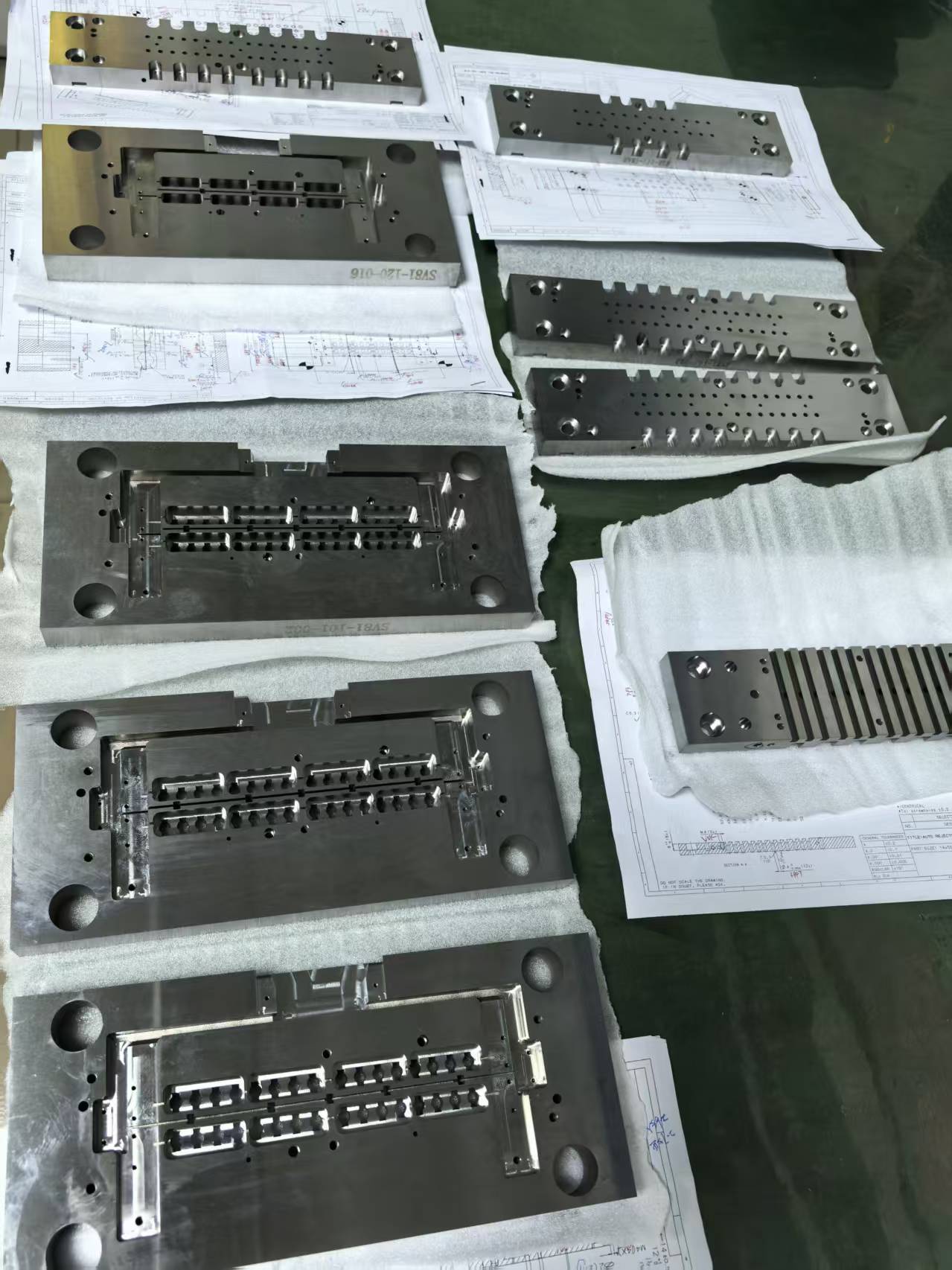
Overview
Wire EDM, also called wire electrical discharge machining or wire cutting, is a precision machining process that removes material by controlled electrical discharge between a thin wire electrode and a conductive workpiece. The wire does not cut like a mechanical saw. Instead, sparks erode the material along a programmed path while the machine controls wire tension, flushing, power settings and motion accuracy. This makes wire EDM valuable for hardened steels, tungsten carbide, precision mold inserts, connector tooling and components that would be difficult to machine with conventional cutting tools.
Process Principles
Industrial buyers often consider wire EDM when a drawing includes small inside radii, narrow slots, delicate contours or high accuracy after heat treatment. Because the process does not rely on cutting force, it can produce shapes in hard materials that may distort or break under milling pressure. For precision mold components, wire EDM is often used after rough machining and heat treatment, helping maintain dimensional stability while creating the final profile. This is one reason wire EDM is widely used in mold manufacturing, connector tooling, precision stamping and automation fixture applications.
Application Fit
The main variables in wire EDM include wire diameter, material thickness, flushing condition, machine type, number of skim cuts and required surface finish. A smaller wire can make smaller internal radii, but it may cut more slowly and can be more sensitive to stability. Oil wire EDM is often selected when finer cutting conditions or higher accuracy are required. Water wire EDM is widely used for general precision cutting. A good supplier reviews these details before quoting, because the process route directly affects lead time, cost and achievable tolerance.
Material Considerations
For purchasing managers, the most important RFQ documents are a 2D drawing with tolerances and a 3D model when available. The drawing should identify critical dimensions, datum references, surface requirements, material grade and quantity. If the part is used in a mold or assembly, it is helpful to explain the function of the critical features. This allows the machining supplier to decide whether wire EDM alone is sufficient or whether grinding, EDM, inspection and deburring steps should be added.
Tolerance Review
Wire EDM can support many conductive materials, including tool steels, stainless steels, tungsten carbide and selected mold materials. The material must be electrically conductive. Ceramics generally require other machining methods unless they are special conductive ceramics. For carbide and hardened steel parts, wire EDM can reduce the risk associated with mechanical cutting forces, but the supplier still needs to review edge condition, heat-affected surface expectations and post-processing requirements.
RFQ Guidance
When comparing suppliers, international buyers should ask about equipment, inspection methods, wire diameter range, experience with small radii and export communication. Jinyi Precision supports wire EDM parts with Seibu and AgieCharmilles equipment, plus oil wire EDM capability. The company also combines wire EDM with PG grinding, mirror EDM and precision inspection when a component requires multiple processes. This integrated process view is especially useful for mold inserts and connector components.
Quality Control
Tolerance should always be discussed with the drawing in hand. A supplier may list reference accuracy such as 0.001mm for oil wire EDM or ±0.002mm for certain wire cutting work, but actual tolerance depends on material, thickness, feature geometry and measuring method. Buyers should avoid assuming that one advertised number applies to every feature. The correct approach is to mark critical dimensions and ask the supplier to confirm achievable tolerance for those specific areas.
Cost and Lead Time
Wire EDM is not always the best choice. If a component is soft, simple and has open geometry, CNC milling may be faster and more economical. If the part requires complex 3D surfaces, CNC machining or grinding may be more appropriate. Wire EDM becomes more attractive when the material is hard, the profile is complex, internal corners are small or post-heat-treatment accuracy matters. For many mold and connector tooling parts, it is part of a combined process rather than a stand-alone solution.
Supplier Selection
Quality control for wire EDM parts usually includes dimensional inspection by projector, height gauge, microscope, CMM or other measuring tools depending on the drawing. The supplier should confirm datum setup and inspection method before production. This reduces disagreement after delivery, especially for overseas projects where shipping time makes rework expensive. Clear inspection expectations are a practical part of international B2B sourcing.
Conclusion
In summary, wire EDM is a strong choice for precision components that require complex profiles, hard materials, small radii and stable dimensions. Buyers in the United States, Japan, Germany, Malaysia and Singapore should prepare complete drawings, identify critical features and discuss material, tolerance, edge condition and lead time early. A supplier with wire EDM, grinding, EDM and inspection capability can provide more reliable process planning for demanding industrial parts.
Need Help With a Precision Component?
If you are evaluating what is wire EDM for a real project, send drawings, material, quantity and tolerance requirements to Jinyi Precision. Our team can review wire EDM, PG grinding, tungsten carbide, ceramic and precision mold component requirements for international buyers.
RFQ Request
Send drawings for review
Please include material, quantity, tolerance, surface requirement and target delivery date in the form. Please send PDF, STEP, STP, DWG or DXF drawings by Email or WhatsApp after submitting the RFQ form.